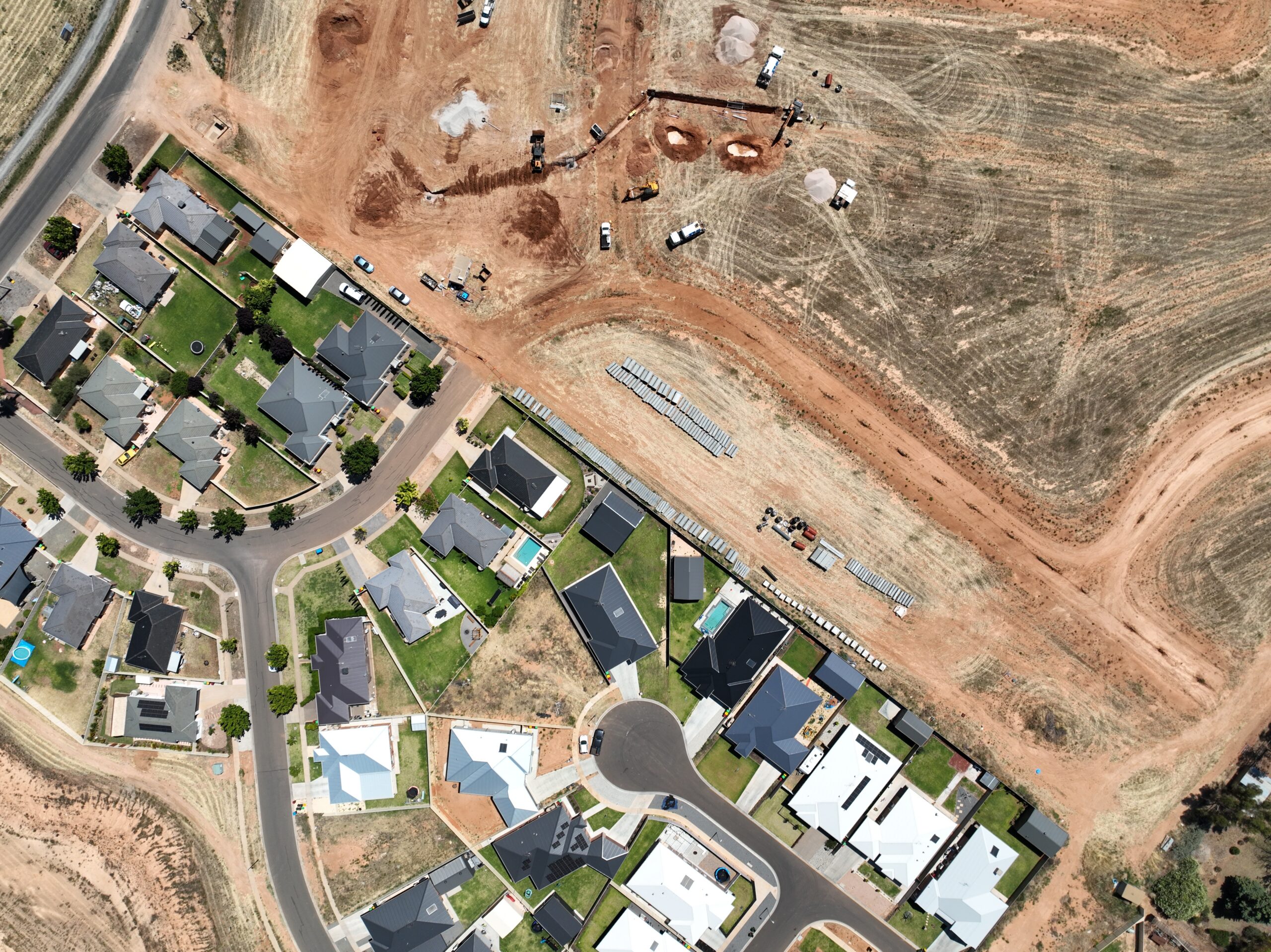

Australia is in the middle of a housing supply crunch. Governments at every level are pushing for more dwellings, yet the pipeline of new construction remains bottlenecked.
A less obvious bottleneck sits on the funding side. Securing funding for construction projects has become harder through traditional banks, and the approval process can take months. For developers and builders working to tight timelines, that kind of delay can stall a project before a single slab is poured.
This is where non-bank lenders have stepped in. Over the past decade, private and non-bank lending has grown from a niche corner of the market into a genuine alternative for construction and development finance. According to CBRE data cited by Barwon, non-bank lenders expanded their share of the commercial credit market from roughly 4 per cent in 2016 to approximately 16 per cent by early 2024, as major banks pulled back from higher-risk, higher-touch lending.
But what does that actually mean for someone trying to get a construction project off the ground? This article breaks down how non-bank construction finance works, why it tends to move faster than bank lending, and what to look for when choosing a lender.
Why are banks pulling back from construction lending?
To understand why non-bank lenders are gaining ground, it helps to understand what has been happening on the banking side.
Following the Global Financial Crisis and the Hayne Royal Commission, the Australian Prudential Regulation Authority (APRA) introduced stricter capital requirements for banks. Under these rules, construction and development loans attract higher risk weightings, meaning banks must hold more capital against them.
The result is that property development lending often delivers one of the lowest returns on capital for banks while carrying the most operational complexity.
In practice, this means longer assessment times, stricter pre-sale requirements, lower loan-to-value ratios and more rigid lending criteria. For a developer trying to move quickly on a site with development approval already in hand, being told the bank needs another six to eight weeks just to assess the application is a serious problem. And if the loan is declined after all that waiting, the project timeline has already been set back significantly.
As a result, banks have increasingly focused on lower-risk residential mortgage lending, leaving a growing gap in the construction and development space. That gap has created an opportunity for non-bank lenders to offer something different.
How does non-bank construction finance work?
At a structural level, construction finance from a non-bank lender works similarly to a bank construction loan. Funds are advanced progressively, in line with construction milestones, rather than as a single lump sum. This staged drawdown model ensures that the lender’s exposure grows in step with the value being created on site.
What differs is the assessment approach. Where banks tend to rely on standardised credit scoring models and rigid serviceability tests, non-bank lenders typically assess each deal on its own merits. They look at the project’s feasibility, the borrower’s track record, the quality of the security, and the strength of the exit strategy. This deal-by-deal approach allows non-bank lenders to say yes to projects that banks either decline or take too long to process.
For example, a developer with a strong portfolio of completed projects and full development approval might still be turned away by a bank if pre-sale targets haven’t been met. A non-bank lender, by contrast, can look at the broader picture, including the project’s feasibility study, quantity surveyor reports and the local market conditions, and make a decision based on the overall quality of the deal.
What makes non-bank lenders faster?
Speed is one of the most commonly cited advantages of working with a non-bank lender for construction finance. But what actually makes them faster?
Shorter decision chains
In a traditional bank, a construction loan application may pass through multiple layers of assessment, credit committees and compliance checks before a decision is reached. Non-bank lenders typically operate with flatter structures, where the people assessing the deal are also the ones making the final call. This means fewer handoffs, fewer delays and faster turnaround from application to approval.
Indicative approvals
Many non-bank lenders can provide indicative approval within a few days, giving developers and builders early certainty about whether their project is likely to be funded. Full approval and settlement timelines vary depending on the complexity of the project and the completeness of documentation, but the overall process is typically measured in days to weeks rather than months.
Streamlined documentation
While non-bank lenders still require thorough documentation, including feasibility studies, valuations, quantity surveyor reports and development approvals, they tend to be more pragmatic about what is needed at each stage. The focus is on understanding the deal rather than ticking boxes in a standardised matrix.
Curious about how fast your project could be funded? CCG’s Rise loan offers indicative approval within days for construction and development projects. Learn more about our construction finance options.
How does flexible loan structuring help construction projects?
Construction projects rarely follow a perfectly straight line. Costs shift, timelines extend, and the unexpected happens. One of the key advantages of working with a non-bank lender is the ability to structure a loan that reflects the reality of how projects actually unfold.
Progressive drawdowns based on milestones
Rather than releasing the full loan amount upfront, construction finance is typically structured in stages aligned with verified construction milestones. In CCG’s case, interest is charged on instalments as they are scheduled. This provides certainty around funding costs while still aligning capital deployment with project progress. For developers managing cash flow across multiple commitments, this structured approach makes a significant difference.
Capitalised interest
Many non-bank lenders offer the option to capitalise interest during the construction period, meaning repayments are deferred until the project is completed and the exit strategy (such as a sale or refinance) is executed. This keeps cash flow pressure off the developer while the project is in progress.
Tailored terms for different project types
Whether it’s a ground-up residential build, a commercial subdivision, a mixed-use development or a major renovation, the loan structure can be tailored to fit. A one-size-fits-all approach does not work for development finance, and non-bank lenders understand that.
Why do direct relationships matter in construction lending?
Construction projects do not run themselves, and neither should the lending relationship. One of the more practical advantages of working with a non-bank lender is the level of direct access borrowers have to the people making decisions about their loan.
With a bank, the experience can feel opaque. The broker or borrower submits an application, and it disappears into an internal assessment process with limited visibility. If something changes mid-project, such as an unexpected cost overrun or a shift in the construction timeline, getting a quick response from a traditional lender can be difficult.
Non-bank lenders, by contrast, tend to work more closely with borrowers throughout the life of the loan. If a problem arises on site, the borrower can often speak directly with the person managing their file, discuss the issue and agree on a solution quickly. This kind of responsiveness is not just convenient; it can be the difference between a project staying on track and one that stalls.
Who benefits most from non-bank construction finance?
Non-bank construction and development finance is not a last resort for borrowers who cannot get a bank loan. Increasingly, experienced developers and builders are choosing non-bank lenders strategically because the speed, flexibility and direct relationships better suit the way they operate.
The types of borrowers who tend to benefit most from non-bank construction finance include:
Developers and builders undertaking residential, commercial, industrial or mixed-use projects who need certainty of funding and fast turnaround.
Property investors looking to fund ground-up builds, major renovations or subdivisions through a structure that matches the project’s cash flow.
Corporate entities and trusts with approved DA projects that need a lender willing to assess the deal on its own merits rather than apply rigid corporate lending criteria.
Mortgage brokers who need a reliable non-bank option for clients whose construction projects fall outside traditional bank criteria. For brokers navigating this space, our blog on Tips for Brokers Offering Construction Loans would be useful.
What should you look for in a non-bank construction lender?
Not all non-bank lenders are the same. When evaluating your options, there are a few things worth considering.
Track record and longevity. How long has the lender been operating? A lender with a long track record of successfully funding construction projects is more likely to understand the nuances of development finance and have the systems in place to support borrowers through complex deals.
Security structure. Reputable non-bank lenders secure their loans with first mortgages over Australian real estate. This provides a clear layer of protection and reflects disciplined lending practices. It is worth understanding how the lender structures its security and how it manages risk throughout the loan term.
Transparency and communication. Can you speak directly with the decision-makers? Will you receive clear, upfront information about rates, fees and terms? The quality of the relationship matters, particularly when things do not go exactly to plan during a construction project.
Flexibility in structure. Does the lender offer progressive drawdowns, capitalised interest and tailored terms? Or are they simply offering a bank-style product without the regulatory constraints? The best non-bank lenders bring genuine flexibility to how they structure construction finance.
Speed of execution. Ask about typical turnaround times from application to indicative approval, and from approval to settlement. If a lender cannot give you a clear answer on timelines, that is a red flag.
How CCG’s Rise loan supports construction and development projects
At Credit Connect Group, construction and development finance is delivered through our Rise loan, a structured finance solution secured by a first mortgage over Australian real estate. Rise is designed for ground-up builds, major renovations, subdivisions, and commercial or mixed-use developments, including projects with existing development approval.
Funding is typically advanced progressively on a Cost to Complete basis meaning funds are released in line with the remaining cost required to complete the project, ensuring the development is adequately financed through each stage. Drawdowns are aligned with verified construction milestones, and the loan structure is tailored to each project’s feasibility and exit strategy.
Indicative approval can often be provided within 24 hours, with funding timelines ranging from days to a few weeks depending on the complexity of the project and the documentation provided.
CCG has been operating since 2006, with nearly two decades of experience in private lending secured by Australian property. Every loan is backed by a first mortgage, and the structure is designed to provide both speed and security for borrowers and investors.
If you’re planning a construction or development project and want to understand your funding options, get in touch with CCG’s borrower team. Call 1300 795 507 or submit a loan enquiry to discuss your project.
Wrapping up
Construction projects move fast, and they need funding that can keep pace. Traditional banks, constrained by regulatory capital requirements and internal processes, are not always able to deliver the speed and flexibility that developers and builders need.
Non-bank lenders have filled that gap by offering faster approvals, flexible loan structures and direct relationships that support projects from approval through to completion. For developers, builders, investors and brokers, understanding how non-bank construction finance works is increasingly important in a market where timing and certainty of funding can make or break a project.
Disclaimer: This article is intended for general informational purposes only and does not constitute financial, legal or investment advice. Credit Connect Group (CCG) recommends that borrowers seek independent professional advice tailored to their individual circumstances before making any financial decisions. All loans are subject to CCG’s standard assessment and approval criteria. Past performance is not indicative of future results.